Designing a mobile event platform that guided users through content, scheduling, and live moments.
Zillow Unlock Mobile Experience System
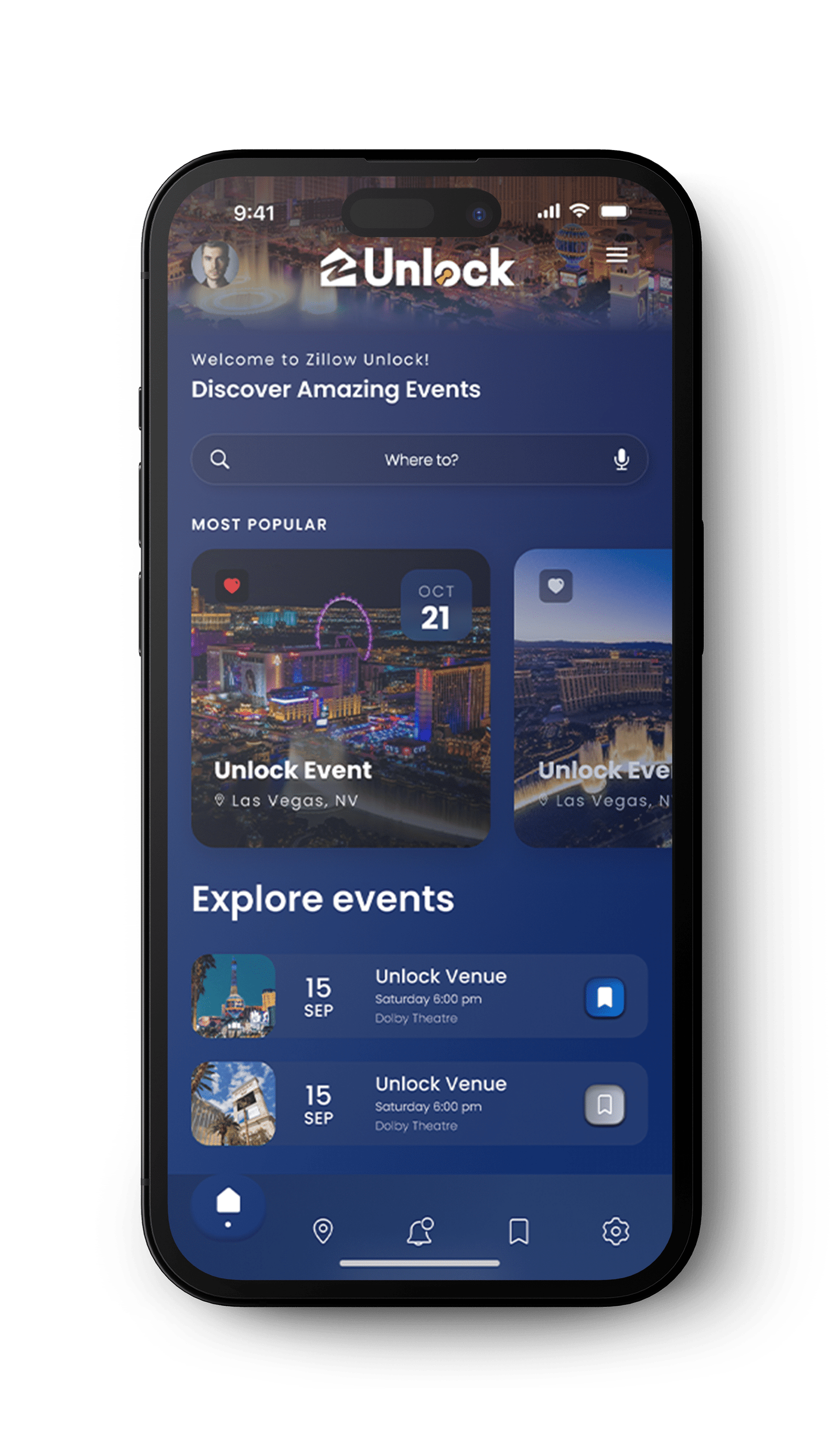
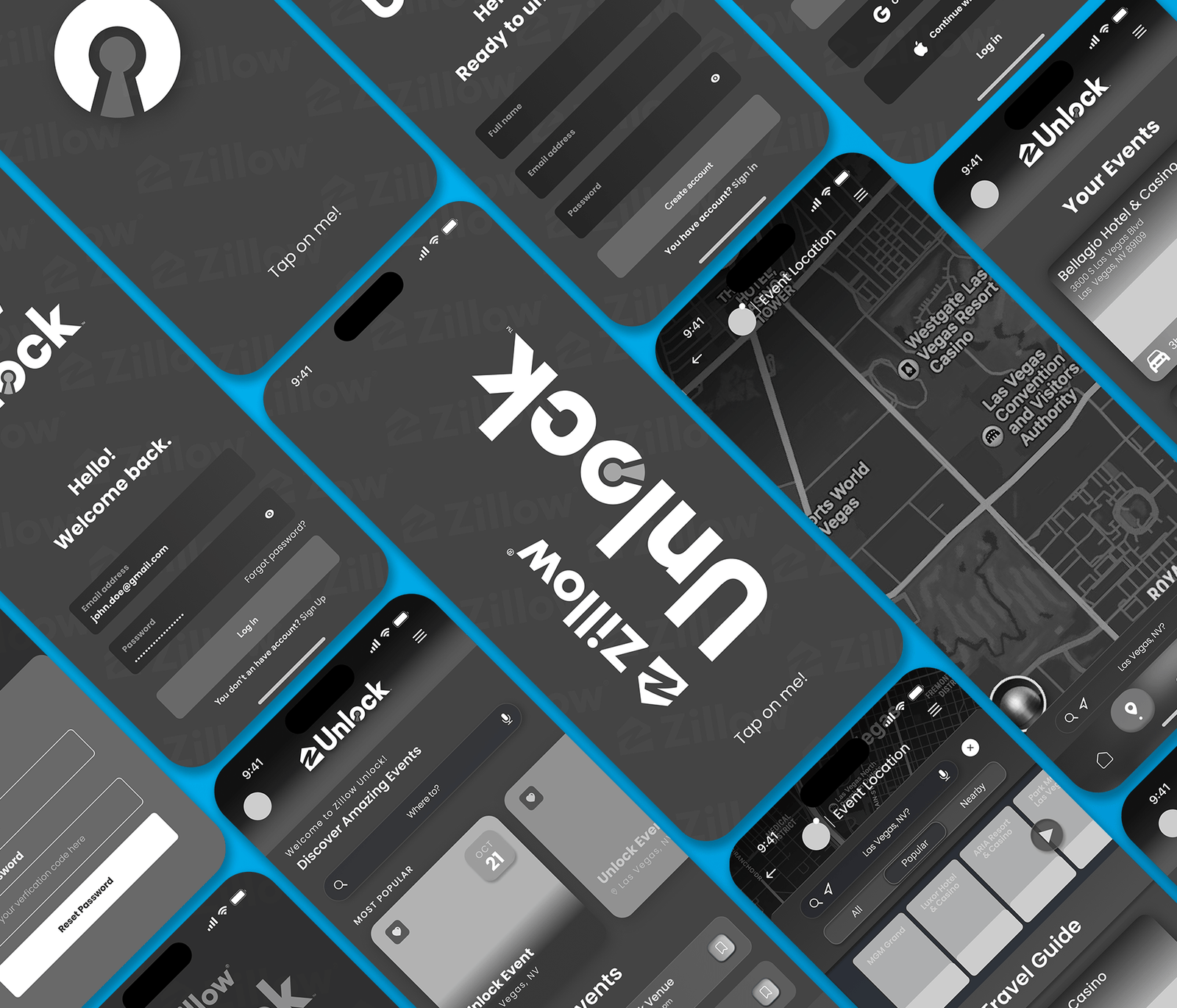
I led UX and visual design for Zillow Unlock, a mobile event application that brought schedules, session details, venue information, and live updates into one experience.
Working with product, engineering, marketing, and event teams, I designed the navigation, screen layouts, and interactive prototypes and supported implementation. The experience focused on helping attendees find what they needed and stay oriented as event information changed.
PROJECT OVERVIEW
Zillow’s event experiences relied on traditional approaches such as static schedules, manual check-ins, and disconnected communication channels. These methods created friction for attendees and increased operational overhead for organizers, particularly during large, fast-moving events.
The challenge was not simply to design a mobile app, but to create an experience that could guide users fluidly through an event while adapting to real-time changes and evolving needs.
Key Challenges
Designing a mobile-first experience for large, time-sensitive live events.
Ensuring clarity and orientation for attendees navigating complex schedules.
Supporting real-time updates without overwhelming users.
Balancing rich functionality with speed, reliability, and ease of use.
Objectives
Help attendees quickly find sessions, schedules, and venue information.
Make schedule changes and live updates easy to understand.
Create consistent navigation across schedules, session details, maps, and notifications.
Establish reusable mobile patterns that can support changing event content and future events.
ROLE & RESPONSIBILITIES
Led end-to-end UX and visual design for the Zillow Unlock mobile application.
Defined interaction models, navigation patterns, and mobile layouts.
Created wireframes, high-fidelity designs, and interactive prototypes.
Collaborated closely with product managers, engineers, marketers, and event teams.
Led iterative design reviews and usability validation.
Prepared design documentation and supported development through implementation.
SOLUTION
Research & Alignment
Conducted research with event stakeholders to understand attendee and organizer needs.
Identified pain points related to navigation, communication, and real-time updates.
Aligned on experience principles centered on clarity, flow, and responsiveness.
PROBLEM
Zillow’s existing event tools lacked cohesion, real-time flexibility, and a clear mobile experience. Attendees struggled to stay informed and oriented, while organizers relied on manual processes and fragmented systems to manage updates and communication.
The goal was to move from static, disconnected tools to a unified mobile experience that could support the pace, complexity, and expectations of modern events.
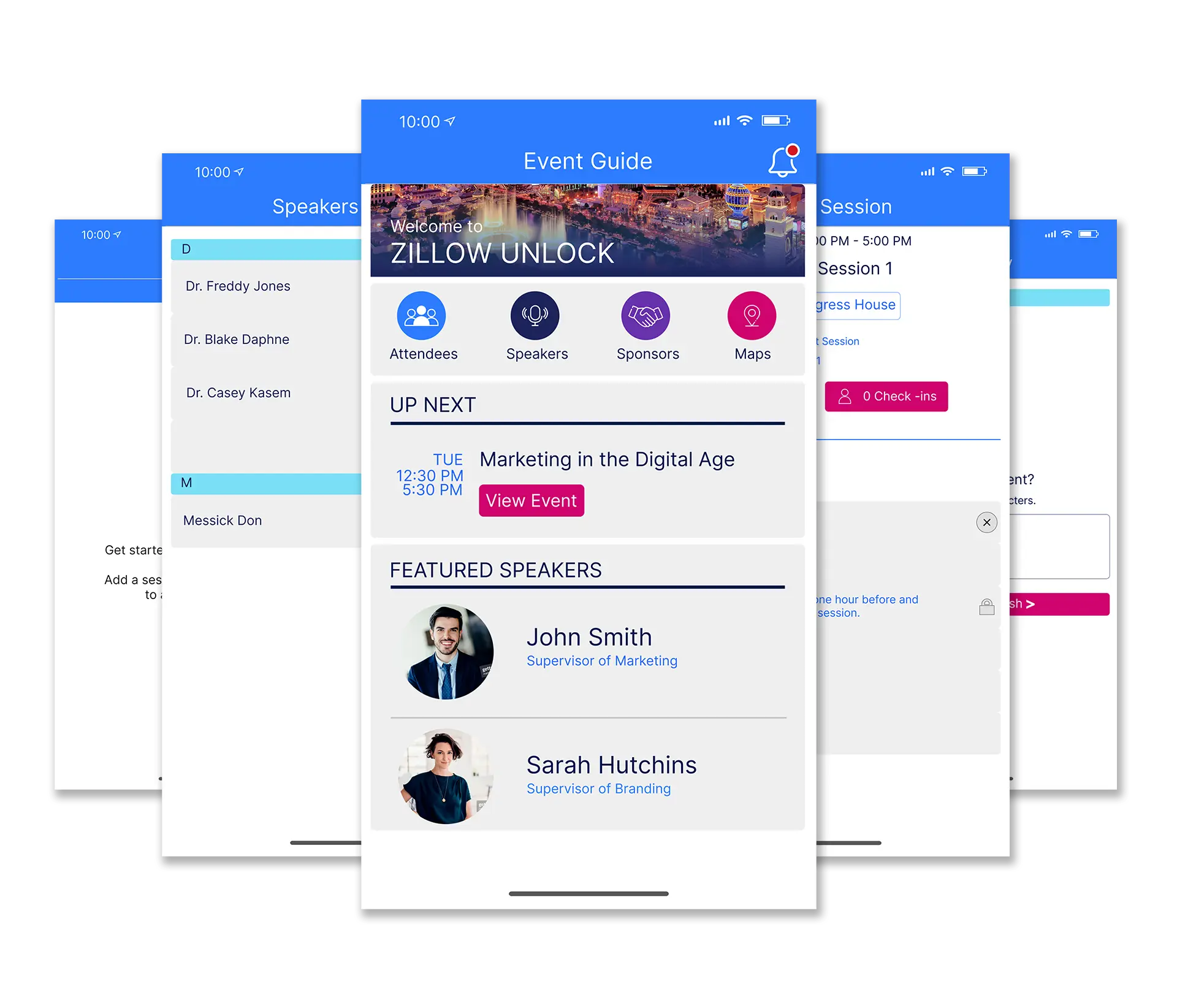
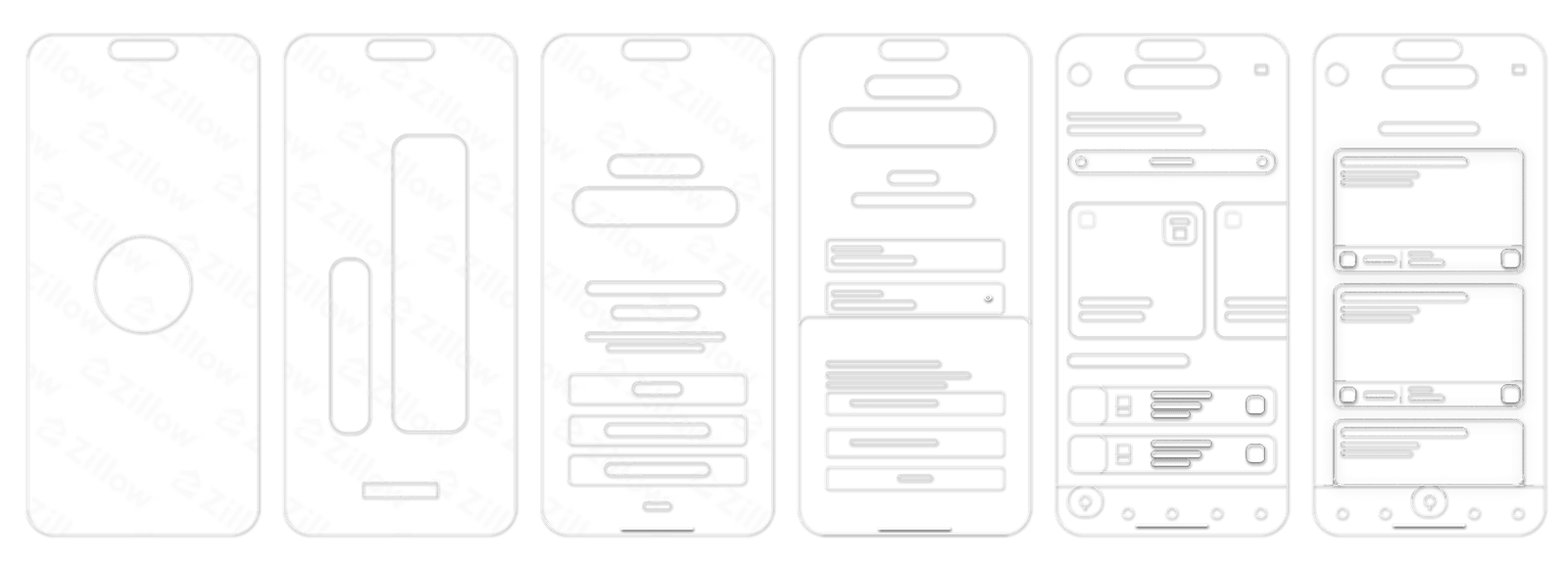
WIREFRAMES
Lo-Fi
Design & Systemization
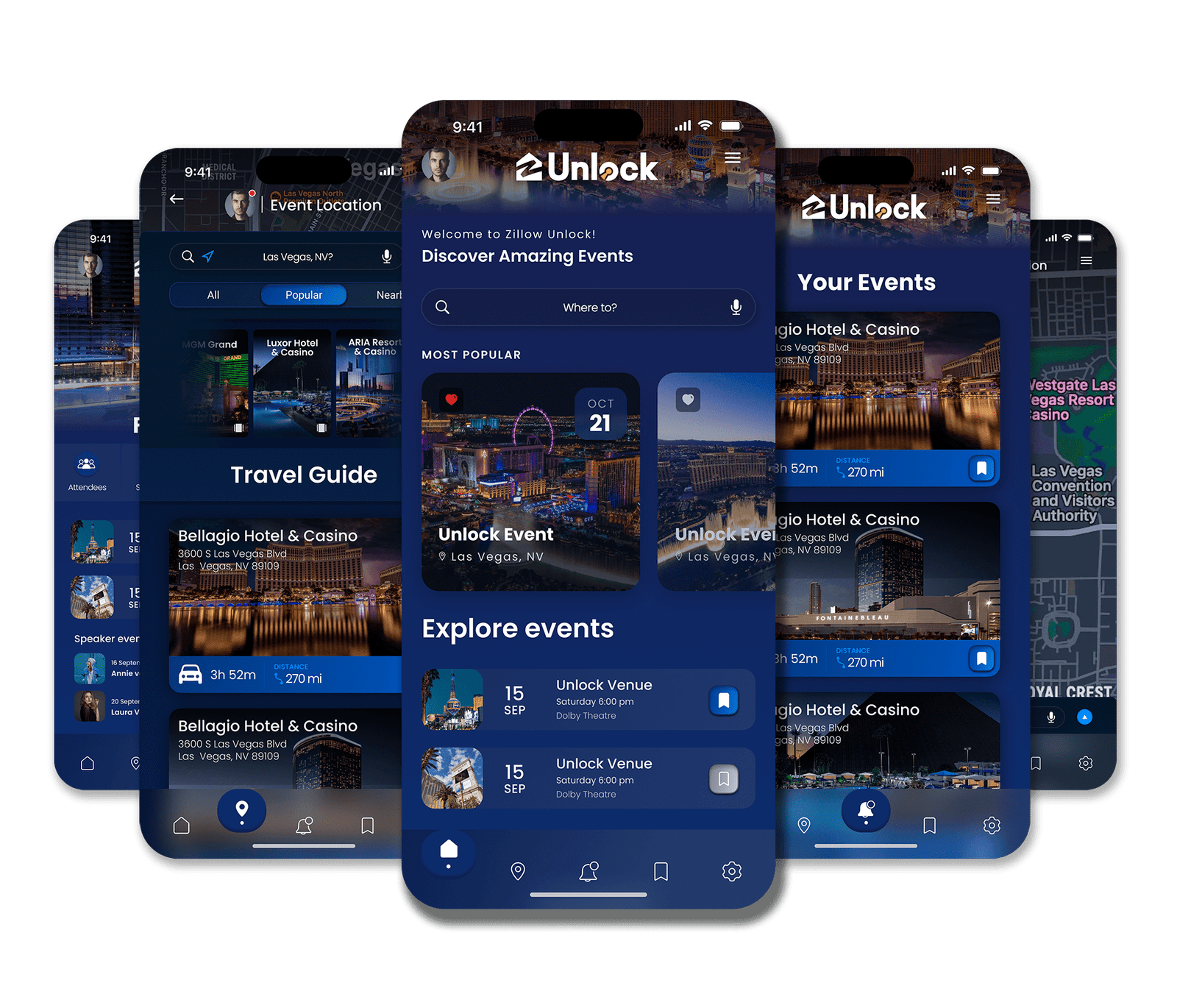
Designed a mobile-first navigation structure optimized for quick access and orientation.
Created modular layouts to support schedules, sessions, maps, and notifications.
Developed high-fidelity prototypes to validate usability and interaction patterns.
Ensured consistency across screens while allowing flexibility for live content.
Execution & Iteration
Delivered production-ready designs and interactive prototypes.
Partnered with development teams through build and QA.
Iterated continuously based on usability testing and stakeholder feedback.
OUTCOMES
Improved attendee engagement and orientation during live events.
Reduced reliance on manual processes and static materials.
Increased clarity and consistency across event communications.
Established a reusable mobile framework for future Zillow events.
CONCLUSION
The Zillow Unlock Mobile Experience transformed how attendees and organizers engaged with live events. By focusing on flow, clarity, and real-time responsiveness, the app replaced fragmented tools with a cohesive, mobile-first system.
This work demonstrated how thoughtful UX design can elevate live experiences, reduce operational complexity, and create meaningful engagement at scale—turning events into guided, connected journeys rather than disconnected moments.